
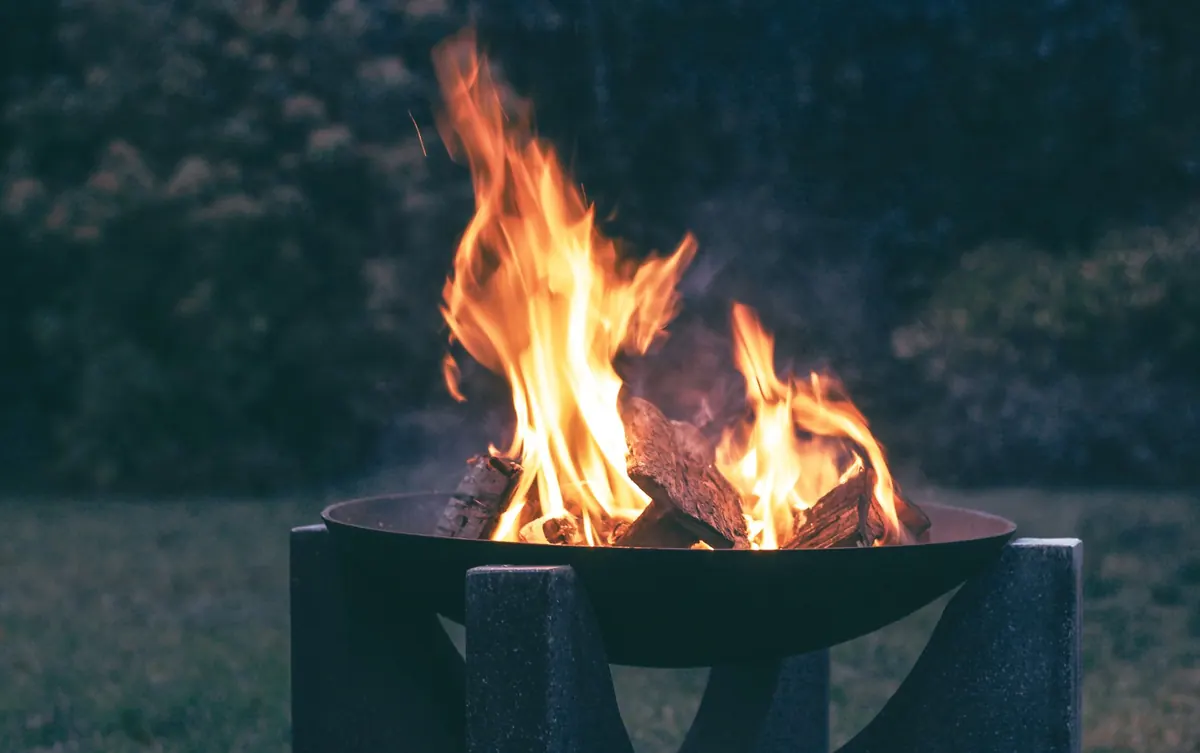
A fire pit, a bag of lumpwood and a stack of seasoned oak: three routes to the same steak, three very different results. The wood-or-charcoal question turns up as soon as someone moves on from toasting marshmallows to actually cooking over their pit, and there is no tribal answer. The two fuels do genuinely different jobs. The better one is simply the one that matches what you're cooking, how long you're willing to wait, and how much attention you want to give the fire.
How each fuel burns
Every difference further down this page comes from how the fuel gets ready.
Wood: flames first, coals later
Wood burns in two stages. Logs catch and flame hard, throwing out fierce radiant heat that will scorch anything close to the pit. Once the volatile compounds burn off, you're left with an ember bed: gentler, steadier and far better for cooking. Reaching it takes patience. Allow 30 to 45 minutes from lighting to a usable bed of coals, longer if the wood is damp or the evening is cold.
Charcoal: ready in one step
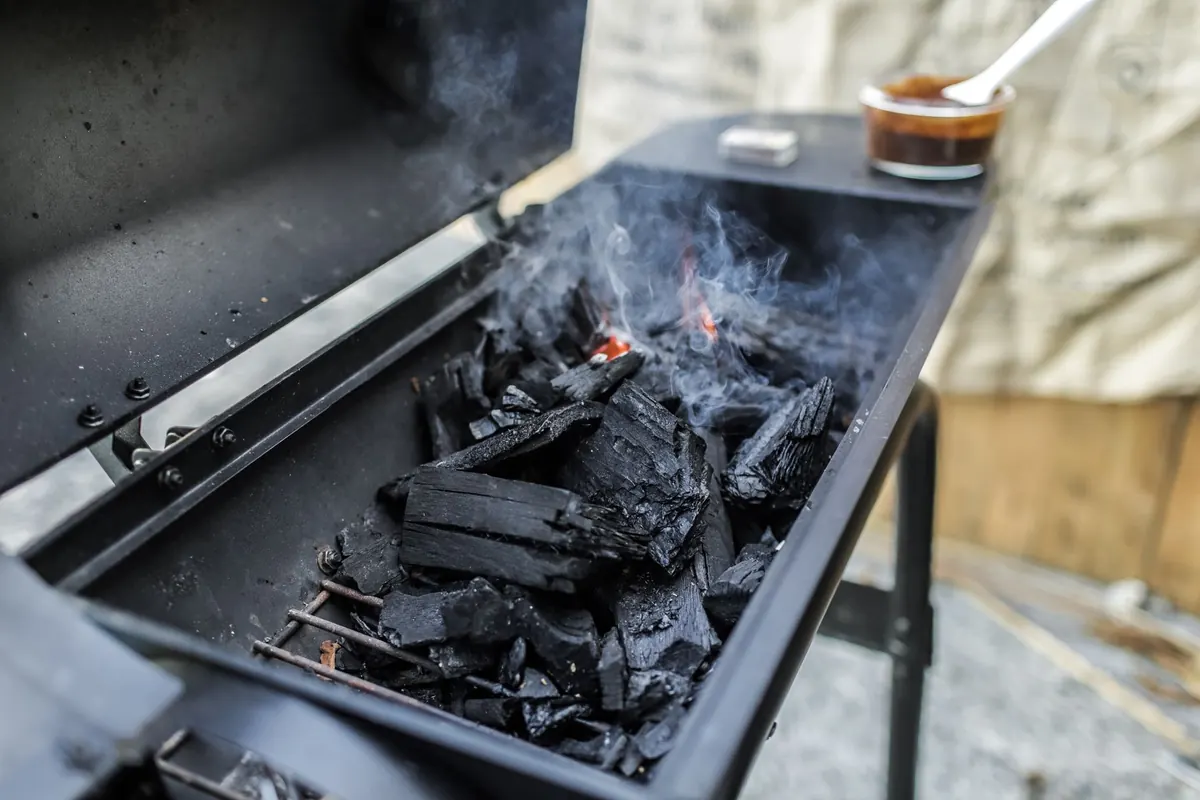
Charcoal has already been through its smoky stage in the kiln. Lit in a chimney starter, it gives you cooking heat in 15 to 20 minutes. Lumpwood is irregular, hot and relatively quick. Briquettes are uniform, slower to peak and longer-lasting. Neither throws much flame, which is exactly the point: you cook over heat, not fire.
Heat output: peak versus usable heat
Wood wins on peak output. A log fire plus a deep coal bed is hot enough to sear hard, boil a pan and keep a Dutch oven at a rolling simmer. The catch is control. An open fire pit has no vents and no lid, so heat spills sideways and fuel burns down while you're still working.
Charcoal wins on usable heat. A chimney's worth of lumpwood spread under a grate gives you a predictable bed you can move around. Bank it to one side, spread it flat for a wide cooking area, or push coals under a single pan. Briquettes run cooler than good lumpwood but hold their shape and their heat for longer, which matters when you're feeding people in batches.
Flavour: what actually reaches the food
Most of the flavour comes from smoke and from fat dripping onto hot coals, not from the fuel itself. Wood gives you the most of both. Oak, ash, beech, apple and cherry all burn well and give a sweet, clean smoke. Avoid resinous softwoods such as pine for cooking: they spit, soot up the food and taste of turpentine.
Charcoal adds very little of its own. Sometimes that's precisely what you want, such as burgers for eight cooked evenly without everything tasting of bonfire. If you do want smoke, drop two or three dry wood chunks onto the coals a few minutes before the food goes on. You get the flavour without waiting for a log to burn down.
One rule worth keeping: never cook over charcoal that has been soaked in lighter fluid. Use a chimney starter with a couple of firelighters underneath, and let the coals ash over properly before the grate goes on.
Burn time and fuel management
- Wood: burns quickly and needs feeding, roughly a log or two every 20 to 30 minutes to hold a good coal bed.
- Lumpwood charcoal: a full chimney usually gives an hour or so of cooking heat, longer if you bank the coals together.
- Briquettes: the steadiest option over a long session, but they take longer to get going.
- Ash: wood leaves a lot and it can smother a fire; charcoal leaves less. Keep a metal scoop or rake to hand.
- Top-ups: charcoal added to a charcoal fire is ready in about 15 minutes. A log added to a wood fire means waiting half an hour for usable coals.
Which fuel suits which cook
This is where the decision usually makes itself.
Reach for wood when you're cooking
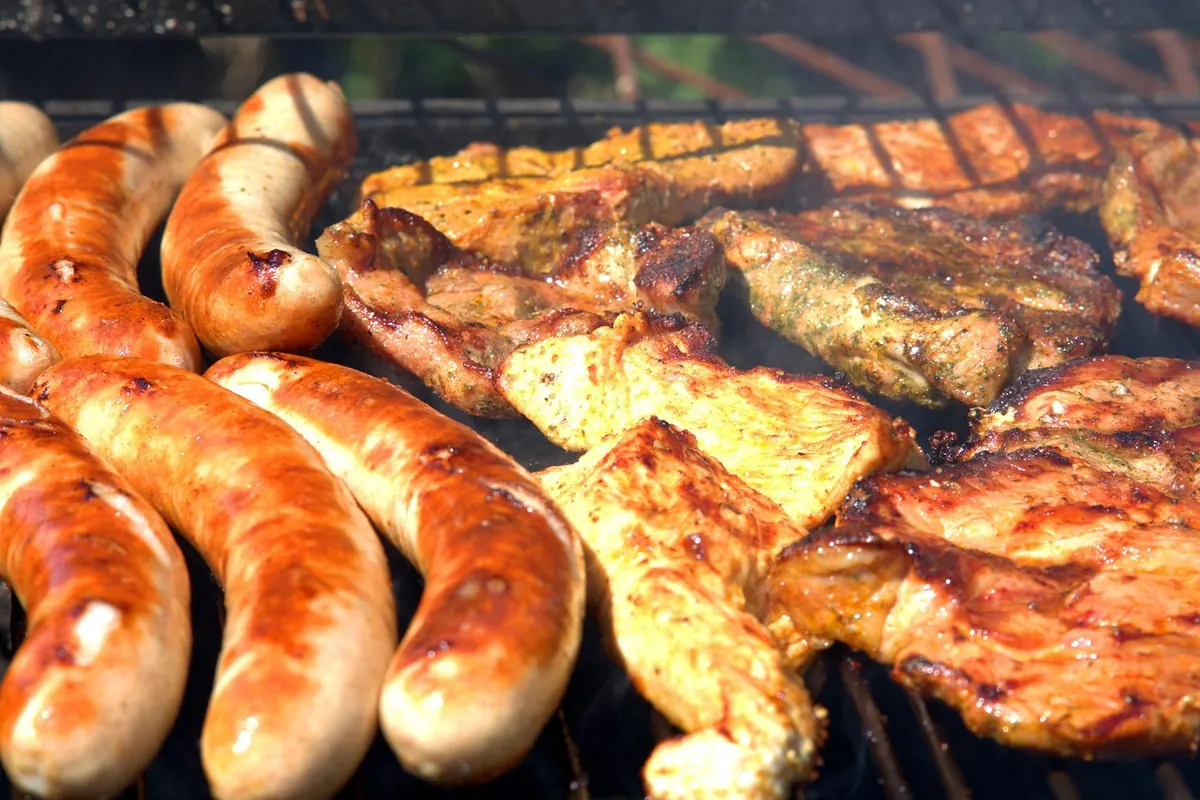
- Steaks, chops and thick sausages seared over a deep ember bed
- Whole fish, corn, baked potatoes and foil parcels tucked into the coals
- Dutch oven dishes: chilli, stews, cobbler, bread
- Anything on skewers or a long fork, where the fire is part of the evening
Reach for charcoal when you're cooking
- Burgers, kebabs and anything for a crowd that needs to come off at once
- Two-zone cooking: sear on one side, rest on the other
- Griddles, planchas and paella pans, which want a broad, even bed
- Long, even roasts on a rotisserie, or a pizza stone if your pit takes one
The hybrid method most fire pit cooks settle on
Light wood first and let it burn down while you prep. Cook over the embers, then top up with a chimney of lumpwood when you need the heat to stay put for another hour. You get the depth of wood smoke and the control of charcoal without waiting for a second log to break down. It's also an economical way to run a long session: logs for the base, charcoal for the control.
Practical notes before you choose a fuel
- Burn dry, seasoned hardwood. Green or damp wood smokes heavily, spits and gives you a poor coal bed.
- Never burn treated, painted, varnished or unknown timber, and skip pallet wood unless you know exactly where it has been. Those fumes have no place near food.
- Cook over coals, not flames. Flames soot up the food and burn the outside before the middle is anywhere near done.
- Only burn in an open, well-ventilated space. Fire pits give off carbon monoxide, so keep them out of garages, tents and conservatories. If you are ever unsure about siting a pit or using one near a structure, take proper advice first.
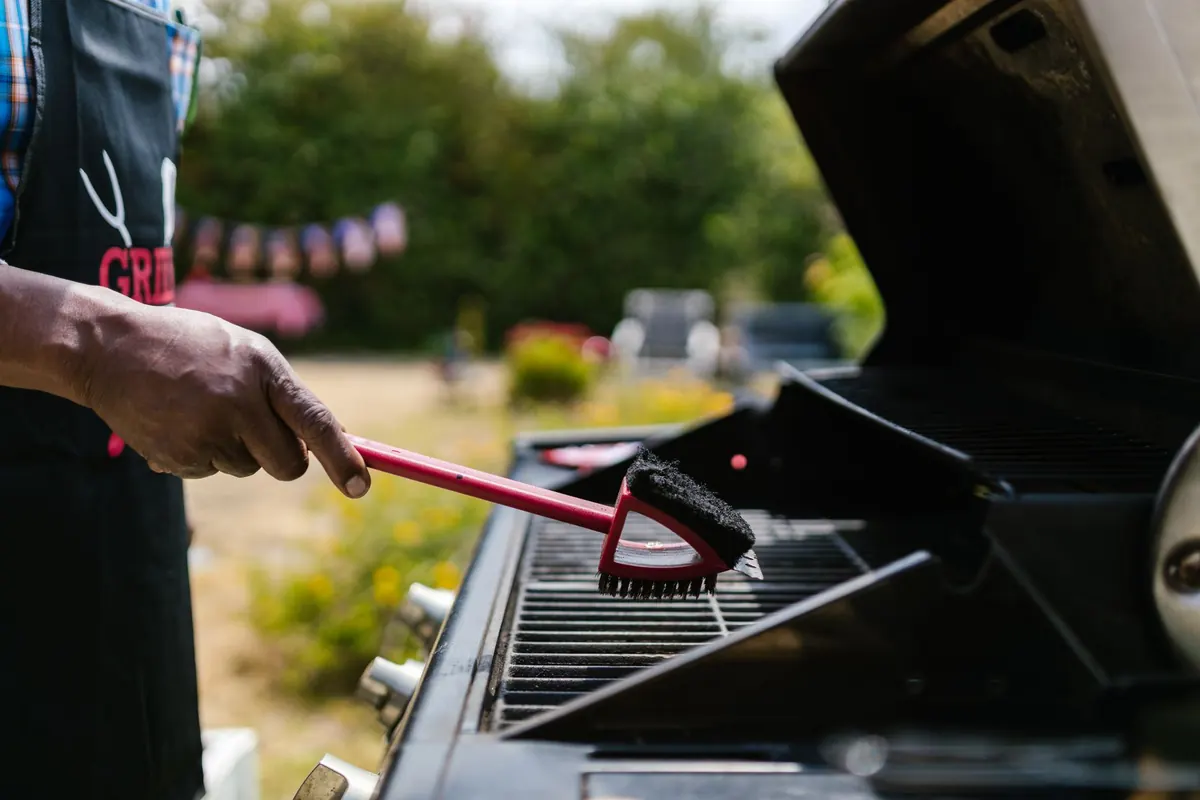
- Warm the grate over the fire before the food goes on, keep long heatproof gloves nearby, and let ash cool completely, ideally overnight, before you bin it.
How to decide tonight
If you're cooking one good thing for two or three people and you don't
Photo: Tom Swinnen / Pexels
Related posts
More stories you’ll love reading