
Charcoal is not one thing. Walk past any garden centre in May and you will see pallets of bags, roughly half of them lumpwood, half briquettes, each claiming to be the only sensible choice for a British barbecue. They are not interchangeable, and the difference shows up in how long your fire lasts, how easily you hold a temperature, how much ash you scrape out the next morning, and what you spend across a summer.
Here is what actually separates them, and how to choose.
What each one actually is
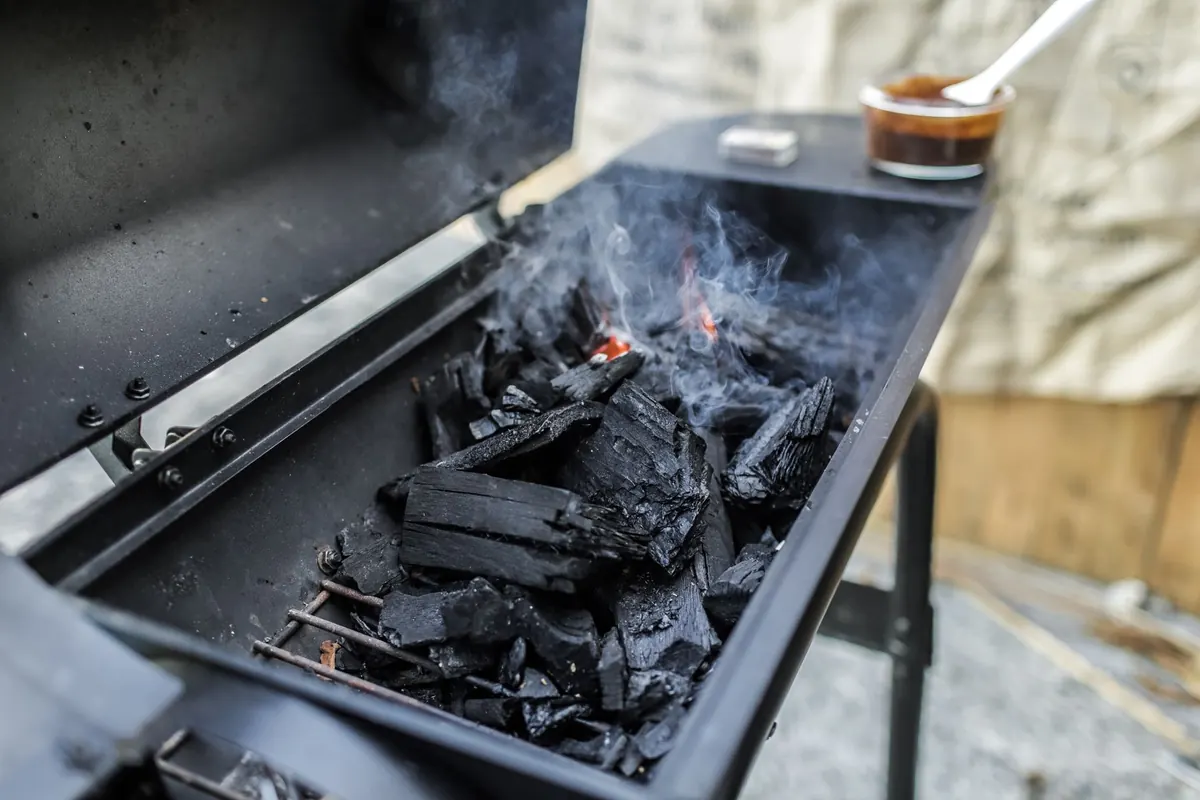
Lumpwood is hardwood — oak, beech, hornbeam, and a good deal of imported tropical hardwood — charred in a kiln or retort with nothing added. What arrives in the bag is irregular: small fragments, flat shards, the occasional fist-sized chunk. That variation is the whole point and the whole problem.
Briquettes are charcoal fines and dust pressed into uniform pillow shapes with a binder, usually starch. Many also contain coal or anthracite, mineral fillers such as limestone, or an accelerant for easy lighting. Same shape, same density, same burn, bag after bag.
Read the label before you buy. Some products stacked beside barbecue charcoal are smokeless fuels intended for stoves and open fires, not for cooking over. Look for wording that says the fuel is suitable for barbecues. Self-lighting briquettes work, but plenty of cooks avoid them because the accelerant can leave a taste if the coals are not fully ashed over.
Lighting and getting up to heat
Lumpwood lights faster. The irregular shapes leave gaps, air moves through the pile, and a full chimney starter over two firelighters will have grey-edged coals in roughly fifteen to twenty minutes. You can also light it in a pyramid on the grate, though it takes longer and burns unevenly at first.
Briquettes are denser and slower — expect twenty to thirty minutes in a chimney. Use a chimney rather than lighter fluid. If you do use fluid, let the coals burn until they are completely grey and any smell has gone before food goes anywhere near the grill.
Both need the same discipline: do not cook over black coals. Wait for grey. Flames and thick white smoke taint food far more than the fuel ever will.
Burn time and temperature control
This is the real divide. Briquettes burn longer and, more usefully, predictably. Bank them to one side of a kettle, or arrange them in a minion or snake pattern, and the barbecue will sit at a steady indirect heat for hours — long enough for a pork shoulder, a whole chicken, or a tray of ribs. Adjust the vents in small steps, wait five minutes, and the temperature responds.
Lumpwood burns hotter and faster. Peak heat is higher, which is exactly what you want under a steak, a chop or a skewer of halloumi. The curve, though, is bumpier. A large chunk catches, the temperature spikes, the piece collapses into embers, and the heat drops. You top up more often, and over a long session you get through more fuel.
A workable rule for two-zone cooking: briquettes for the indirect side, where you want stability, and lumpwood over the coals for a hard sear. If you want serious heat for a long stretch, use more lumpwood than feels sensible — or add a few briquettes underneath to hold the base.
Ash and clean-up
Lumpwood leaves less ash by volume, and what it leaves is fine and powdery. Briquettes leave noticeably more, thanks to the binder and the mineral fillers. On a kettle or a small hibachi that matters by the end of a long cook, because a thick layer of ash clogs the vents and chokes the fire.
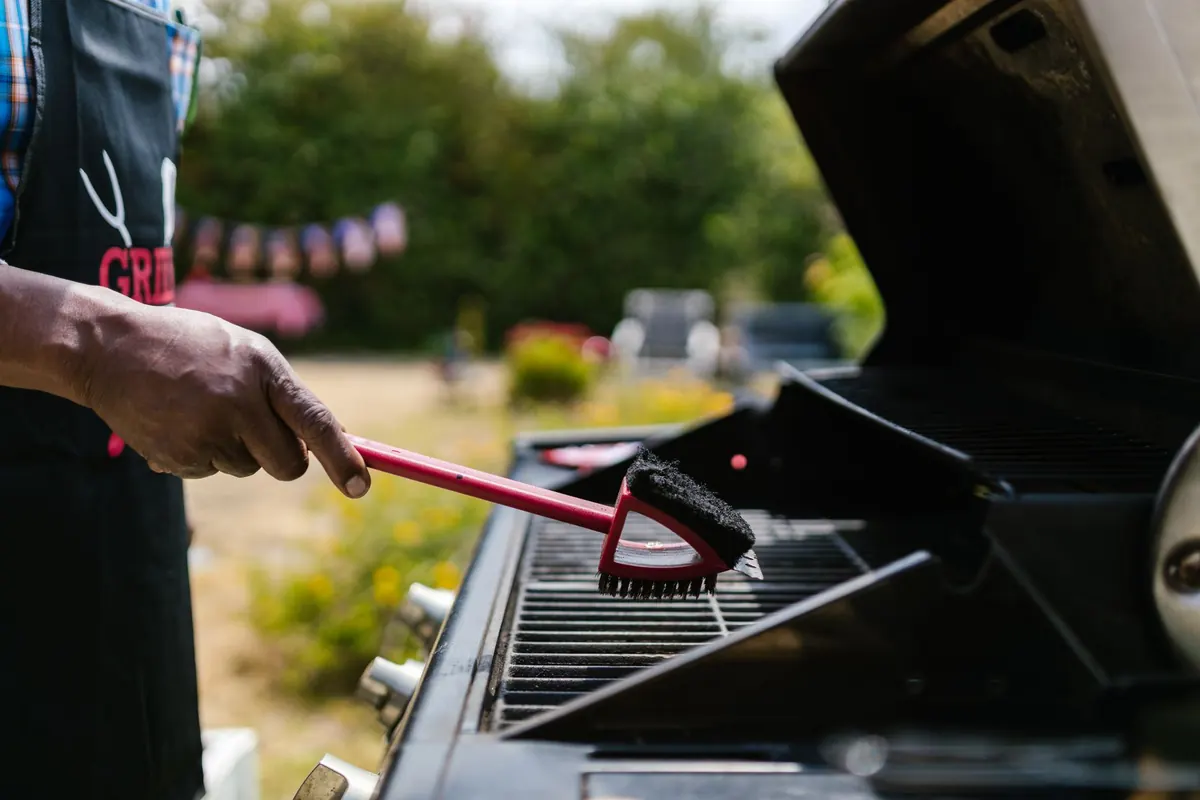
Empty the ash pan or bowl before every session. Never tip warm ash into a bin, a bag or a hedge — leave it to cool completely, ideally overnight, then bag it. Small amounts of cold charcoal ash can go on the garden, but it is alkaline, so keep it away from acid-loving plants such as rhododendrons and blueberries, and do not dump large quantities in one spot.
Flavour
Lumpwood tastes of what it is made from: a clean woodsmoke that most people recognise as proper grilling. Different hardwoods bring slightly different characters, though the difference is subtle once a rub and a sauce are involved.
Briquettes are more neutral, which is an advantage when you want the rub, a handful of soaked wood chips or a marinade to lead. The exception is briquettes with a high coal or filler content, which can leave a sharp, acrid note — especially if the fire is starved of air and smouldering. If your coals smell harsh when lit, let them ash over completely, or choose a different brand next time.
Cost
Briquettes are usually cheaper per kilogram, and you need fewer of them for a long cook, so the cost per session is often lower. Lumpwood costs more per bag and you may burn through a bag faster, particularly when grilling directly over the coals.
Buying larger bags or from a local supplier rather than small forecourt packs improves the maths on both. Storage matters too: damp charcoal is hard to light and damp briquettes crumble. Keep the bag sealed in a dry shed or garage, and use the oldest bag first.
Which should you buy?
- Choose lumpwood if you grill hot and fast, cook steak, kebabs, burgers and vegetables, want a clean woodsmoke flavour, and don't mind topping up the fire.
- Choose briquettes if you cook low and slow, want repeatable temperatures, do a lot of indirect cooking or smoking on a kettle or bullet smoker, and want the cheapest fuel per hour of cooking.
- Buy both if you have the space. It is the answer most experienced cooks give, and for good reason.
Getting the best out of both
Lay a base of briquettes across the charcoal grate, then scatter a couple of handfuls of lumpwood on the side you plan to sear over. You get a steady floor of heat with a hot zone on top — useful for a butterflied leg of lamb, where you want a hard start and a gentle finish.
Start the chimney the moment you begin preparing food, not when the guests arrive. Give yourself twenty minutes of lead time and the cooking becomes relaxed. Judge heat by holding your hand at grate level rather than trusting a lid thermometer, which can read well off the true temperature where the food sits. Keep a spare bag in the shed; a crowd and a rain shower will empty one faster than you expect. And remember that on a kettle, temperature is controlled by vents, not by fuel. Open the bottom vent to heat up, close it to cool down, and change things in small steps.
Buy a bag of each, cook the same meal twice, and you will know which one suits your barbecue — and your patience — better than any bag label can tell you.
Photo: 2857440 / Pixabay
Related posts
More stories you’ll love reading