

The last cook of the year usually ends the same way. The lid comes down, the tongs get a quick wipe on a tea towel, and everything is bundled into a drawer or a plastic box until spring. Then the first warm Saturday arrives, you reach for your brush, and the bristles are matted with old fat while the spring on your tongs has seized solid. Fifteen minutes of attention in autumn saves an afternoon of scrubbing in April.
Clean it before it goes anywhere
Grease is not the real problem. Grease holds moisture, and moisture sitting on steel through a cold, damp winter is what turns a decent set of tools into rusty scrap. Baked-on fat also hardens over the winter months, so what wipes off easily in October needs soaking and scraping by February.
- Pick a dry, mild day and work outside or in a well-ventilated garage.
- Fill a bucket with hot water and a good squirt of washing-up liquid. Add a splash of white vinegar if you can already see rust blooming.
- Scrub metal parts with a stiff nylon brush. Keep wire brushes away from anything non-stick.
- Rinse in clean warm water, then dry straight away with a towel rather than leaving everything to drip.
Two things to avoid: never leave wooden handles soaking in the sink overnight, and never leave tools sitting in dirty water while you tidy up. Wood swells, cracks and grows mould; steel starts rusting at the waterline within hours.
Brushes: check the bristles, then the handle
Wire bristle brushes
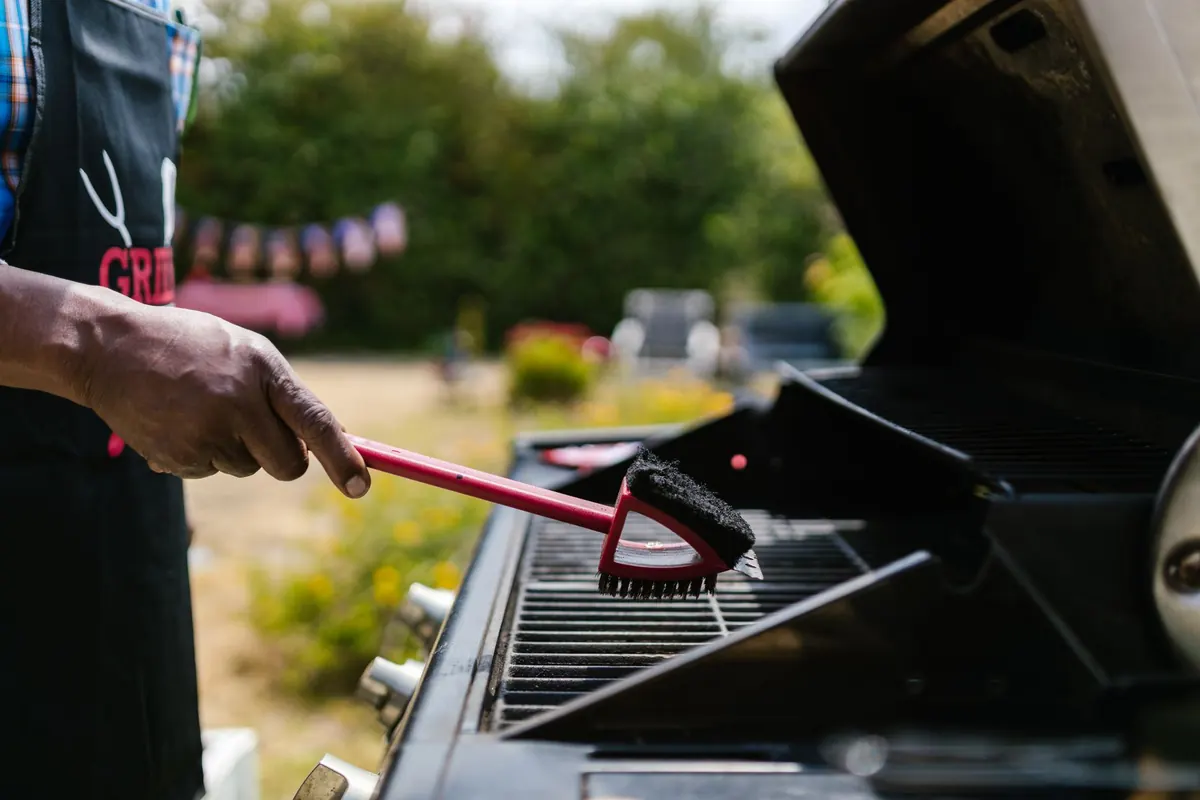
Give the head a close look in good light. If bristles are bent, loose or missing, retire the brush. A stray wire ending up in a burger is a genuine hazard, and plenty of cooks have moved to coiled spring brushes or nylon for exactly that reason. If your wire brush is in good condition, scrub it clean with hot soapy water, dry it thoroughly and store it somewhere dry — never in the damp corner of a shed where it will rust into a solid block.
Nylon, silicone and wooden handles
Nylon bristles are fine in warm soapy water but will splay and melt if you use them on a hot grill, so keep that in mind next season. Wooden handles need a little kindness: once they are bone dry, rub in a thin coat of food-safe oil, such as mineral oil or a dedicated board oil. Boiled linseed oil is not the one for anything that touches food, so check the label. A once-a-season oiling keeps handles from cracking and lifting.
Grease is the enemy you can see. Damp is the one that decides whether your kit survives the winter.
Tongs, spatulas and the rest of the metalwork
Open stainless tongs at the hinge and scrub the pivot with an old toothbrush — that is where old fat collects and where the spring starts to stiffen. A single drop of food-safe oil on the pivot after drying keeps them snapping shut smoothly. Silicone-tipped tongs deserve a squeeze and a twist: if a tip is split, peeling or loose, replace the tongs rather than risk it letting go mid-flip.
Spatulas, burger presses and griddle blades should be taken apart if they unscrew, washed, dried and lightly wiped with kitchen oil to keep rust at bay. Scrapers with wooden or plastic handles dry best standing upright so water drains away from the joint.
Thermometers need a gentler approach
Thermometers are the most easily ruined accessory in the box, mostly because people treat them like cutlery.
- Digital instant-read: wipe the probe with a warm, soapy cloth and dry it. Only submerge it if the manufacturer says it is waterproof, and never put it in the dishwasher.
- Batteries: take them out before long storage. A leaking battery will quietly destroy a thermometer that otherwise had years left in it.
- Dial thermometers: clean the stem, keep the dial out of water. Moisture inside the face fogs the glass and you will never trust the reading again.
- Leave-in probes: check the cable for nicks and kinks, then coil it loosely. Sharp folds are what kill probe cables.
Store thermometers in their sheath or a padded pouch, away from heavy tools that can knock a probe out of true. Recheck accuracy in spring using an ice-water bath before you rely on it for a roast.
Drying and storing so spring is easy
Air is your friend here. Lay everything on a towel or a rack for an hour, ideally in the sun, turning anything hollow so water runs out. Metal can go into a low oven for a few minutes, but keep plastic, silicone tips and thermometers well away from heat.
Then store with a bit of thought about the space:
- Use a lidded plastic crate rather than a cardboard box, which pulls in damp and feeds mould.
- Keep the crate off concrete floors and away from outside walls.
- Hang brushes bristle-down or lay them flat; never stand them on their bristles.
- Drop in a couple of silica gel sachets and replace them mid-winter.
- Keep greasy metal separate from thermometers, cloths and anything absorbent.
Covers: clean, dry, then fold
A barbecue cover spends the winter doing hard work, so give it a wash before it takes on the worst of the weather. Brush off dust, then wash with warm soapy water and a soft brush. Rinse well and dry it completely, inside and out, on a line in the sun or over a railing. A cover folded away slightly damp will come out smelling of mildew and may be stained for good.
Check the seams, straps and eyelets while it is off the barbecue, and patch small tears before they spread. If water has stopped beading on the fabric, a re-proving spray designed for outdoor covers will bring it back. Store it loosely folded in a dry place — and never drop a cover over a warm or wet barbecue, because the condensation trapped underneath is exactly what rusts grates and seizes hinges.
Ready for the first cook of spring
When the weather turns, everything should come out of storage ready to use. Unpack the crate on a dry day, wipe down each tool and check hinges, tips and bristles before the first cook. Fit fresh batteries to your thermometer and test it in ice water. Rinse the cover and let it air. If something has seized, split or fogged up over winter, replace it now rather than fighting it over a hot grill in June. A little care in autumn is what makes that first sunny Saturday feel effortless.
Photo: RDNE Stock project / Pexels
Related posts
More stories you’ll love reading